TRACE is a prototype. Demonstrations use synthetic data. No real case data has been processed.
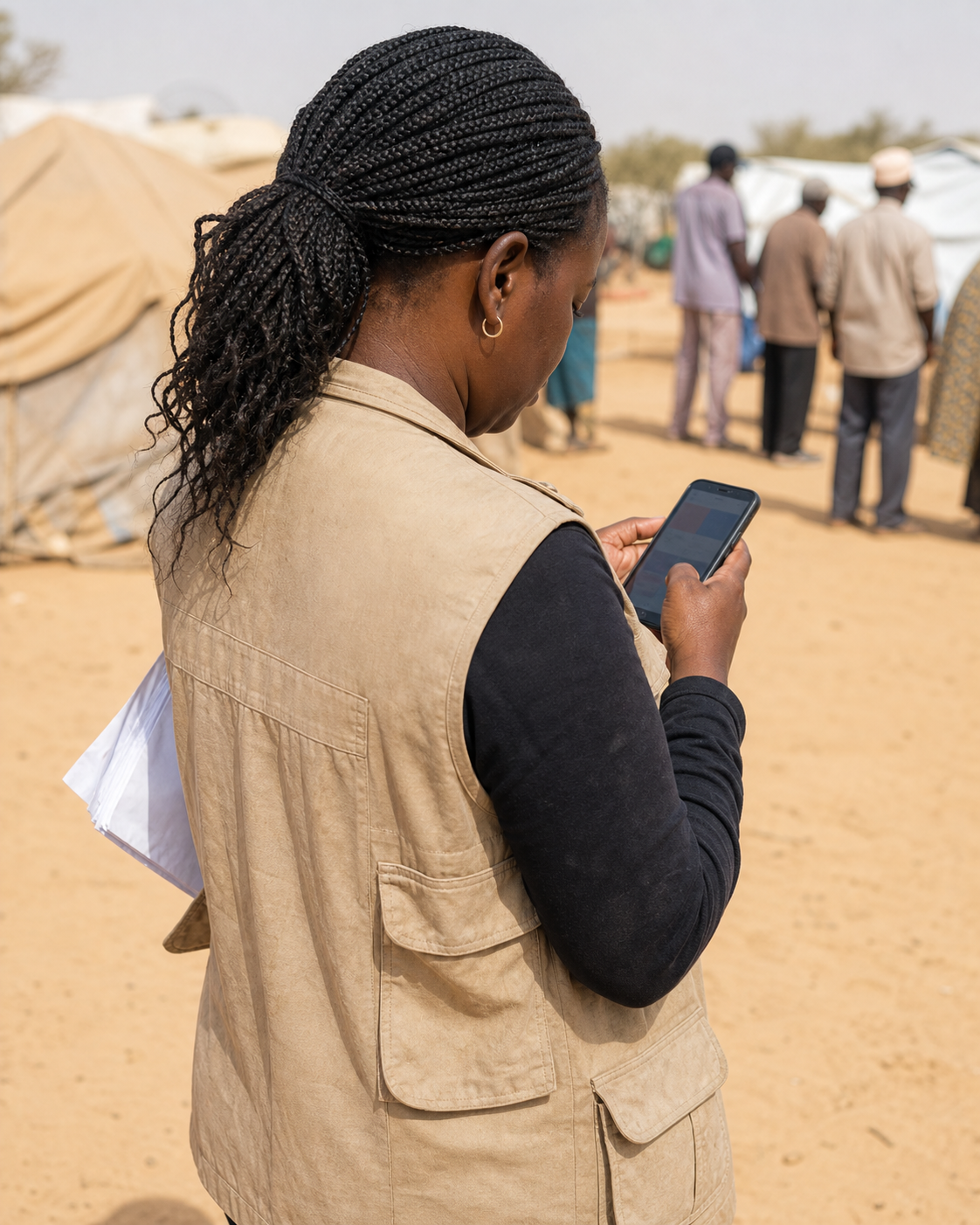
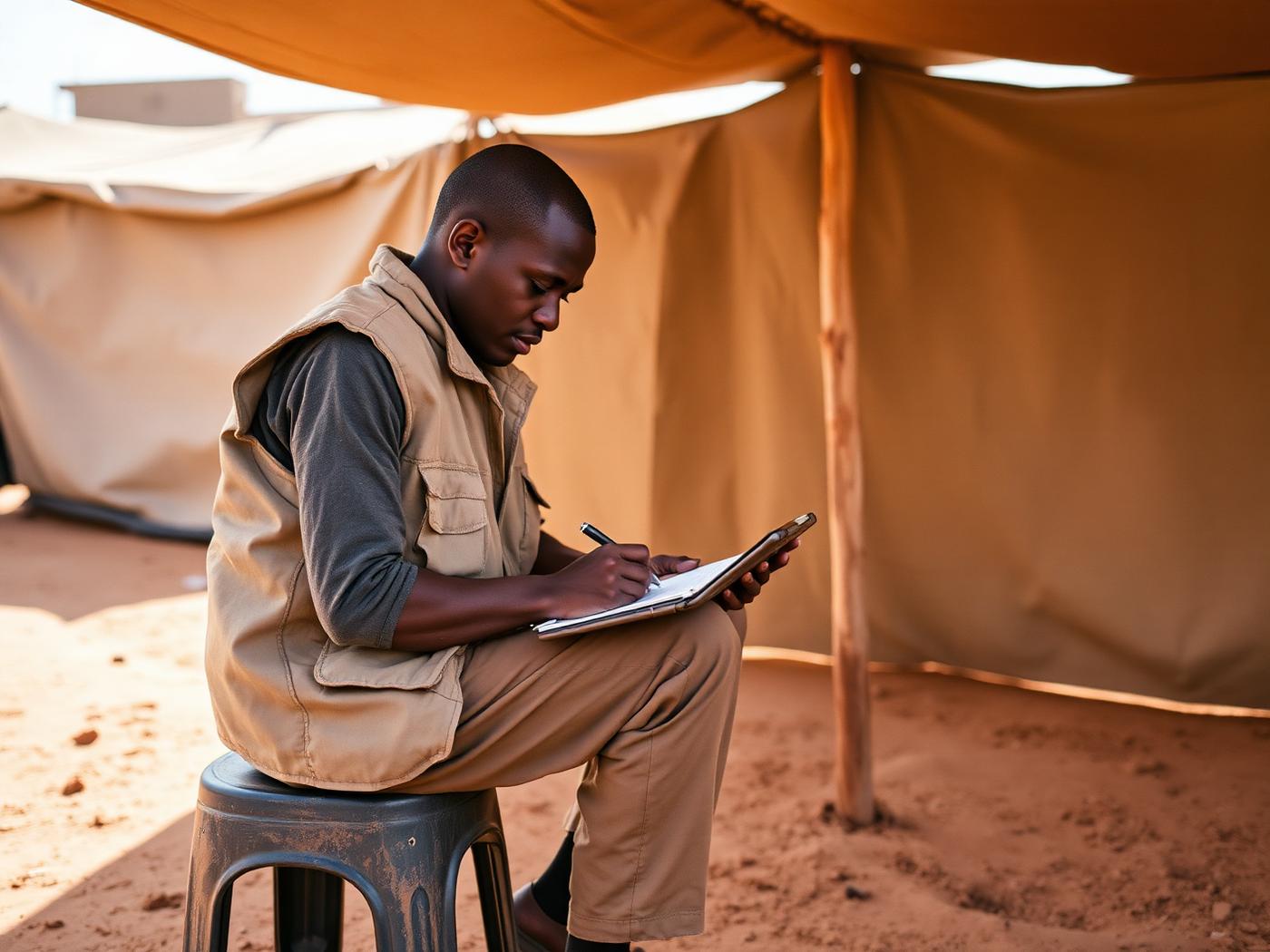
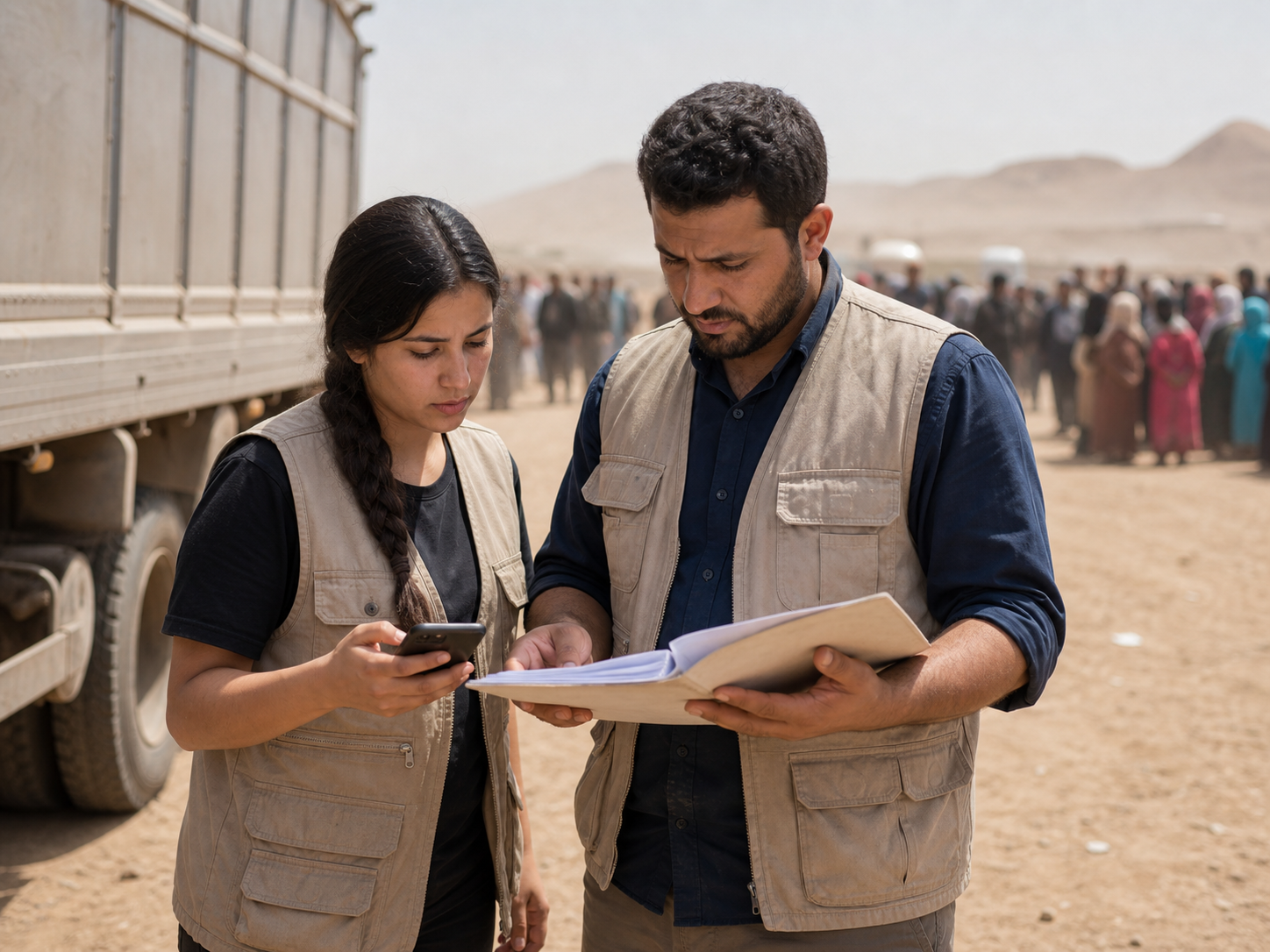
Built for field teams in crisis zones
You can read one file at a time. TRACE reads all of them.
Take field notes in any of 44 languages. TRACE writes the case record, flags the risks, and shows you what is repeating across your files. In the field. On any phone. With or without a signal.
of active cases per caseworker → One AI that reads all of them
Dozens*of active cases per caseworker → One AI that reads all of them
languages in. Structured output in six languages.
44*languages in. Structured output in six languages.
capture and risk scoring need no signal. AI structuring syncs on reconnect.
Offline-first*capture and risk scoring need no signal. AI structuring syncs on reconnect.
* Indicative figures, not yet independently validated.
See TRACE in action
Scroll through a day in the field.
Chapter 1
Your caseload, at a glance
Start every shift knowing exactly where to focus. TRACE reads your full caseload and surfaces the cases that need attention today, based on risk signals, follow-up timelines, and pattern changes across every file.
Today
Active Caseload
A. MahamatHigh
Last contact: 2 days ago
F. OkonkwoMedium
Last contact: 6 days ago
S. BekeleStable
Last contact: 11 days ago
3 of 50 cases need attention today.
Chapter 2
Pattern detection, automated
Across 50 files, TRACE catches what no individual caseworker could see. Escalating trauma signals. Recurring profile gaps. Missed follow-up windows. It flags them before they become crises. Pattern detection is demonstrated on a simulated caseload in the current prototype.
Cross-case
Pattern Detection
Risk detected
Reviewed 50 active files this morning.
Escalating trauma signals in 4 files
Same broker named across 3 unlinked cases
2 follow-up windows closing this week
Chapter 3
TRACE writes the case note
After every interaction, TRACE writes the case note. You review, approve, done. The note is captured and saved with no signal, and structured when you reconnect.
Draft ready
Voice Note
Follow-up visit conducted at the transit site. Client reports stable shelter placement and renewed contact with two family members. Protection concerns unchanged since last visit. Referral to livelihoods partner discussed and consented to. Next check-in scheduled in seven days.
Saved offline.
Chapter 4
Generated output, ready to review
TRACE drafts the full case note, referral letter, and risk score, in the format your reporting system expects. The caseworker reads, edits if needed, and approves.
Ready for review
Structured Output
Case ID
MIG-2024-0471
Risk level
Elevated
Follow-up
7 days
Referral
Livelihoods: drafted
Ready to export
Drafted from the field note.
Chapter 5
44 languages in. Any phone.
A caseworker should not have to find a form in the right language before they can write anything down. TRACE accepts field notes in any of 44 languages, including Hausa, Swahili, Somali, Wolof, Bambara, Amharic, Yoruba, Igbo and Lingala, and returns a structured record in any of six languages: English, French, Spanish, Arabic, Russian or Chinese. The interface itself is multilingual. Voice is transcribed live in eighteen languages. In twenty-six more TRACE records audio and says so on screen, per language, before the microphone is tapped. No language is given a near-neighbour speech model. A wrong one returns a fluent transcript in the wrong language rather than an error.
Detected: Somali
Language Support
Transcribing…
“Waxaan ka baqayaa inaan ku noqdo deegaankii aan ka imid.”
Structured in English
Client reports: Fear of return to origin area. Last contact: 3 months ago.
44 languages in · six out
Today
Active Caseload
A. MahamatHigh
Last contact: 2 days ago
F. OkonkwoMedium
Last contact: 6 days ago
S. BekeleStable
Last contact: 11 days ago
3 of 50 cases need attention today.
Features
Built for the caseworker, not the database.
KoBoToolbox and ODK are good at collecting data. Neither thinks with it. TRACE does.
AI daily brief
Every morning, TRACE reads your full caseload and writes a prioritized briefing: what's urgent, what's overdue, what patterns have emerged across cases. You start the day knowing what matters. The brief is generated when the device has a connection.
Cross-case pattern intelligence
The same broker appearing in three unconnected files. A new trafficking route. Debt bondage rising in a specific population. TRACE surfaces what no individual caseworker can see alone, and flags it for human review before anyone acts on it. Demonstrated on a simulated caseload in the current prototype.
Offline-first
Intake and case management run with no network connection. Cases are stored on the device. Sign-in is not enabled in this prototype, so no case created in the app reaches TRACE's servers today. The server path is built: when sign-in is enabled, cases will also be saved to TRACE's servers, where others in the caseworker's organization will be able to read them. AI structuring queues and completes when a signal returns; the daily brief and the AI assistant need a live connection.
Key differentiator
Multilingual
Caseworkers write field notes in any of 44 languages, and a structured record comes out in six: English, French, Spanish, Arabic, Russian and Chinese. No per-language form setup. No language is given a near-neighbour speech model. A wrong one returns a fluent transcript in the wrong language rather than an error.
Risk flagging
Risk factors surfaced for caseworker review against six CTDC/IOM trafficking indicators, showing which indicators drove each flag and what to ask next. The indicator set is drawn from published standards, has not been field-validated, and is demonstrated on a simulated caseload in the current prototype.
Document generation
Referral letters, risk assessments, and reintegration plans. In English, French, Spanish, Arabic, Russian or Chinese. Every document requires caseworker review before it goes anywhere.
Sector-specific templates
Protection, DRR, shelter, health and cash templates aligned to the forms your reporting already uses.
Data protection built in
Cases are stored on the device. Sign-in is not enabled in this prototype, so no case created in the app reaches TRACE's servers today. The server path is built: when sign-in is enabled, cases will also be saved to TRACE's servers, where others in the caseworker's organization will be able to read them, access will be scoped to that organization, anonymous access will be refused, every change will be recorded with who made it and when, and a case will be closable but not deletable from inside the app. When a caseworker uses an AI feature, the case content in that request is sent to Anthropic's API to be processed and returned; it is not retained by TRACE. Encryption at rest and structured consent capture are on the roadmap, not in the current prototype.
Spend the interview with the person in front of you, not the form. Leave the site with the case file already written.
Program managers
Consistent, complete records across every team and site. Referrals and follow-ups, traceable end to end.
Org leadership
Donor-ready reporting from real field data, plus a defensible audit trail for protection and safeguarding.
Use cases
Built for the hardest documentation contexts.
Case registration that keeps the interview human
Register survivors and at-risk individuals from the caseworker's own dictated notes after the interview. TRACE structures the account, flags protection indicators, and drafts the referral letter before the caseworker leaves the site.
Referral letters drafted in the receiving agency's format
SCENARIO
A protection interview ends with a survivor's full account, but the case file is written hours later from memory and scattered notes. Indicators are missed, timelines blur, and the caseworker begins the next day already behind.
How it works
The caseworker stays in charge. TRACE handles the rest.
Most tools create work. TRACE eliminates it.
1
Caseworker speaks
The caseworker types or dictates in the language the survivor is actually speaking, in the field, with or without a signal. No form has to be built in that language first.
2
TRACE processes
TRACE transcribes, classifies, surfaces risk factors against the CTDC/IOM trafficking indicators used in the anti-trafficking profile, and checks for gaps in the case profile. Risk scoring runs on-device and works with no signal; AI structuring uses a connection when one is available. Nothing is acted on until the caseworker reviews it.
3
Data is ready
The caseworker reviews everything before any action is taken. TRACE is the thinking partner. The caseworker is the professional.
Compare
How TRACE sits next to the tools you already run
TRACE is not a replacement for your data platform. It is the layer between the interview and the record.
Feature comparison of TRACE, KoBoToolbox, ODK and paper forms
Capability
RecommendedTRACE
KoBoToolbox
ODK
Paper forms
AI daily caseload brief
Automatic
No
No
No
Cross-case pattern intelligence
Demonstrated on simulated caseload
No
No
No
Offline capture and case management
Yes
Yes
Yes
Yes
Voice input
Yes, multilingual
No
No
No
AI case file generation
Yes, on reconnect
No
No
No
Risk flagging
Yes
No
No
No
Referral letters
Yes
No
No
Manual
Report generation
Yes
Partial
Partial
No
Setup time
Minutes
Days
Days to weeks
Immediate, but no data
Documentation in the field
Where TRACE is built for
Field teams at work
The problem, in the field
Why documentation still breaks down
TRACE is pre-launch. These are the documentation problems we built it to solve, drawn from field practice.
PROTECTION CASEWORK
A caseworker completes an interview in a displacement site and then spends two hours reconstructing the case file from memory and handwritten notes, with detail lost at every step.
MULTI-SITE PROGRAMS
A program manager receives case data from six field sites in four different formats, unable to see patterns across them because nothing is structured consistently.
CONNECTIVITY GAPS
A field team works where there is no signal for days, so every digital tool defaults back to paper, and the paper does not reach the database for weeks.
About
The founder
Portrait of Elke-Esmeralda Dikoume
“The constraint in field casework was never funding. It was time, and the cognitive load of documentation while a survivor is sitting in front of you.”
Elke-Esmeralda Dikoume
Founder & CEO, TRACE
Best Overall Hack, Open Atlas AI for Social Good Hackathon 2026
Third place, Call for Code AI: United Against Trafficking, run by Austin AI Hub with UN Human Rights as impact partner
Humanitarian specialist with nine years across UNICEF and the World Bank, five of them at the World Bank. She built TRACE for the documentation problem she kept meeting in the field.
Humanitarian Law
Data Protection
Field Research
GDPR Compliance
NGO Operations
Risk Assessment
Pilot TRACE in your field operation.
TRACE is in active development. We work with field organizations directly. Tell us about your program and we'll figure out together whether it fits.
We reply to every request from a field organization.